2. The Fall and Original Sin (Genesis 3)
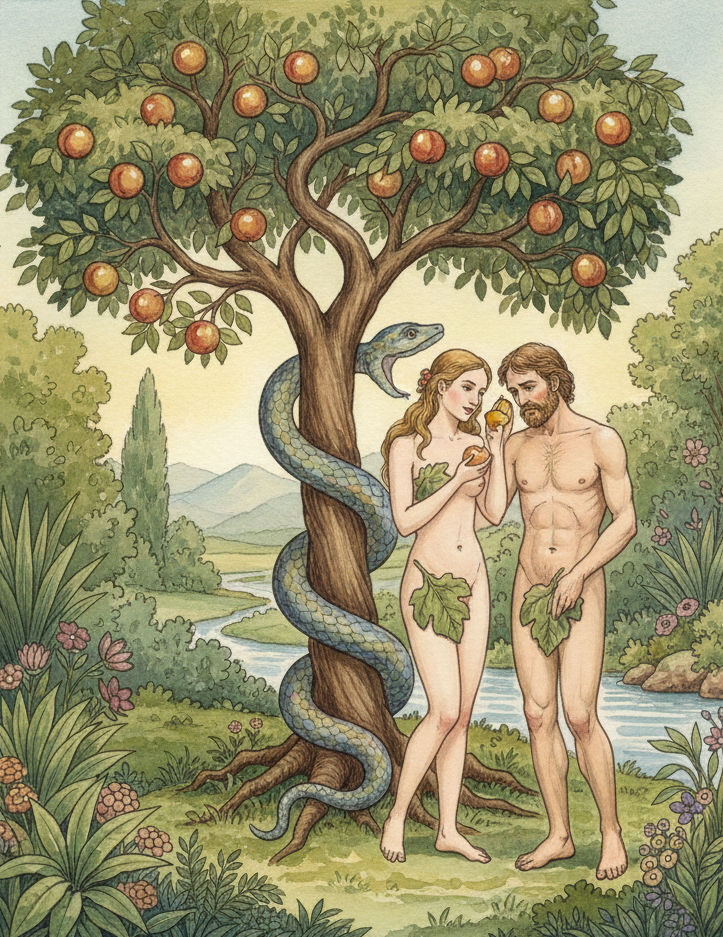
Following the initial harmony in the Garden of Eden, the biblical account introduces us to the mystery of the origin of evil and human suffering. In the center of paradise, God had planted the tree of the knowledge of good and evil, not as a trap, but as a sign of human freedom and the necessary dependence of man upon his Creator. However, the serpent, described as the most cunning of creatures and a symbol of the forces of evil that pre-exist man, introduces doubt into the woman's heart. The tempter does not openly deny God but distorts His image, presenting Him as a rival who restricts freedom and forbids the fruit out of envy: "You will be like gods," the serpent promises, sowing the suspicion that obedience to God is an obstacle to personal fulfillment.
Seduced by the appearance of the fruit and the desire for absolute autonomy, the woman eats and gives some to her husband. In that instant, the original harmony is shattered. The Bible emphasizes that sin is not a simple mistake but a deliberate rebellion and a distrust in divine goodness. The effect is immediate: nakedness, which was previously a sign of innocence and transparency, becomes a source of shame, and fear replaces trust, leading the couple to hide from God's presence among the trees. Sin breaks the relationship with God, but also the internal harmony of man and his relationship with his neighbor; Adam blames the woman, and the woman blames the serpent.
Despite the gravity of the fault, God does not abandon His creature. In pronouncing the sentences on the consequences of sin—pain, hard labor, and death—God also pronounces the first promise of redemption, known as the Protoevangelium. By cursing the serpent, God announces a permanent enmity between it and the woman, ensuring that the offspring of the woman will ultimately crush the tempter's head. Thus, the account of the fall, though somber, ends by opening a door to hope: human history will not be just a history of sin, but above all, a history of salvation where God's mercy will untiringly seek to restore what man has lost by his own will.
Key Points according to the Bible
- The essence of sin: Defined as disobedience motivated by pride and a lack of trust in God's word.
- The figure of the tempter: Evil does not originally spring from within man, but from an external instigation (the devil), though man freely consents.
- Consequences of original sin: Results in the loss of original holiness and justice, affecting not only Adam and Eve but all their descendants.
- Breakdown of unity: Sin introduces conflict into marriage and disorder in the relationship with nature.
- The Protoevangelium: The announcement in Genesis 3:15 is the first prophecy of the victory of Christ (the new Adam) and Mary (the new Eve) over sin and death.
Biblical Text
You can consult the full biblical text here: USCCB - Genesis Chapter 3
Reflection Activities: Genesis 3
| 1. Text Comprehension: According to the account, what strategy does the serpent use to tempt the woman, and what immediate change do Adam and Eve experience regarding their own nakedness after eating the fruit? |
| 2. Doctrinal Content: The text affirms that sin is not a simple error. How does Catholic doctrine define the essence of original sin and what were its consequences for harmony between man, God, and neighbor? |